Measles is thought of as a childhood illness, but more Pa. adults are getting sick
Two-thirds of measles cases in Pennsylvania have been among adults, a mirror opposite of how measles has typically spread. The state has the worst outbreak in the nation.
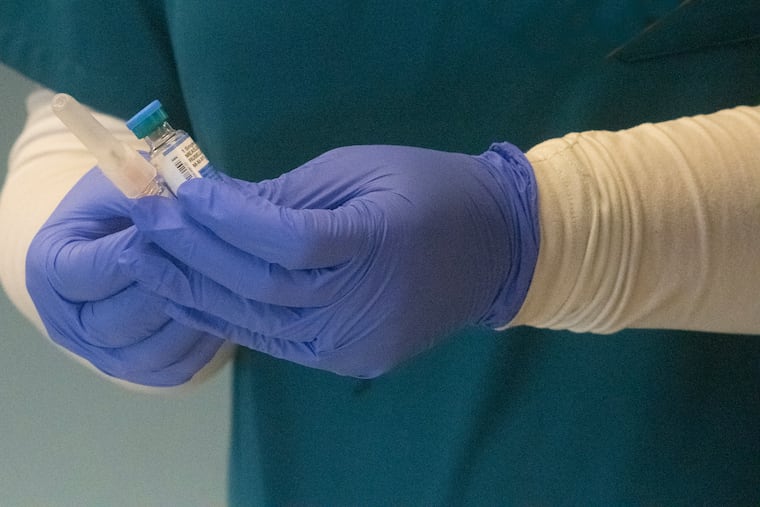
The adults who arrive at Penn State Lancaster Medical Center with measles have symptoms far more severe than the virus’ hallmark cough, fever, and rash.
They are weak and disoriented with meningitis, sepsis, or pneumonia. Some have bacterial infections in their blood, kidney failure, or hepatitis.
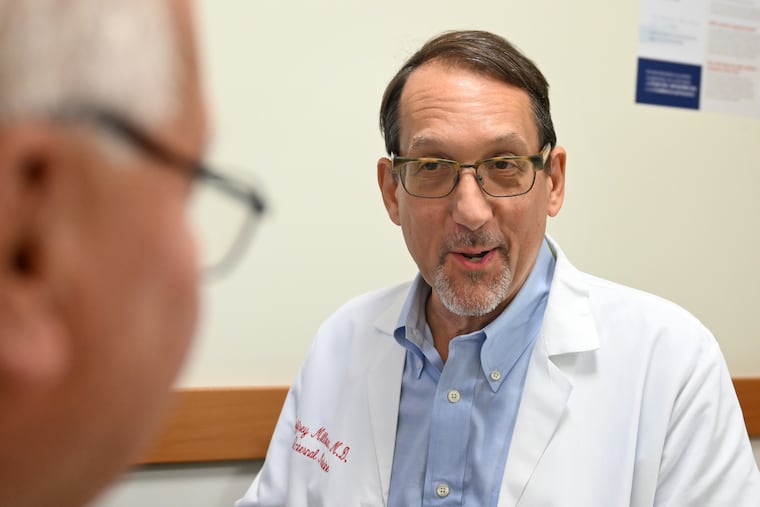
“To see that in otherwise young healthy patients is very unusual,” said Fahmida McGann, an infectious disease physician at the hospital.
Pennsylvania’s measles outbreak is defying epidemiologists’ expectations and historical trends: Adults account for about two-thirds of the 1,300 cases reported by the state in the largest outbreak the country has seen in decades.
» READ MORE: Pennsylvania has logged 1,000 measles cases, among the biggest outbreaks in decades
Until now, measles was rarely seen among adults. The virus is so contagious that virtually no one made it out of childhood without getting sick prior to the advent of a vaccine in the 1960s. Recent major outbreaks in Texas and South Carolina primarily affected children, with adults accounting for about a third of cases.
Pennsylvania’s outbreak is also sending people to the hospital at almost twice the rate seen in other recent outbreaks. Six people diagnosed with measles — four of them adults — have died, according to state health officials and local coroners. An infant, born with the disease after his mother was sick during pregnancy, was among the deaths.
» READ MORE: A 20-year-old Amish woman with leukemia got measles and died in Pa.’s largest outbreak in three decades
The toll showcases how adults over age 20 are among the groups at greatest risk for serious complications, given that they are more likely than children to have underlying medical conditions that make it harder to recover.
Pennsylvania is seeing the highest hospitalization rate among children under 4 years old. They represent one in three of those admitted to the hospital, according to the state health department.
Doctors say adults who waited to seek medical attention until they were too sick to carry out their home and work responsibilities could also be contributing to the high hospitalization rate.
And just this week, health providers received a state-issued alert about congenital measles, which occurs when a pregnant woman passes on measles to her newborn infant. Cases are so rare that standard tracking is non-existent, and little is known about its long-term implications.
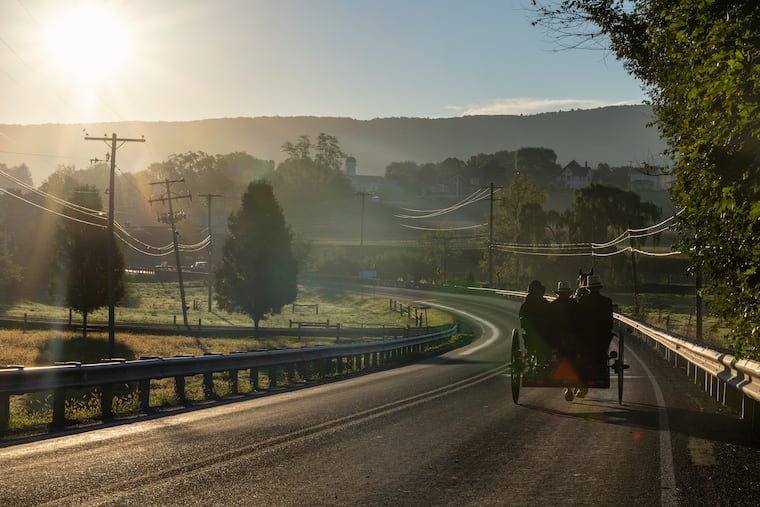
Pennsylvania’s measles outbreak is a phenomenon decades in the making, experts say. The virus appears to be spreading widely in communities, such as Amish enclaves across the state, where some have skipped vaccines for a generation or more.
“You have to have individuals who aren’t getting vaccinated, but who also aren’t being exposed to measles for decades,” said William Moss, a professor of epidemiology and international health at the Johns Hopkins Bloomberg School of Public Health.
A yearslong decline in vaccination rates amid rising politicization and misinformation has left any unvaccinated individual — infant, child, or adult — vulnerable to the disease now ripping through the state.
Children under 5 and people with compromised immune systems are also at high risk for severe illness.
» READ MORE: New vaccination data show hundreds of Philly-area schools vulnerable to a measles outbreak
Measles among adults
Adults between ages 25 and 49 have been hardest hit by Pennsylvania’s measles outbreak, state data shows, followed by adults between the ages of 18 and 24. Combined, they represent about 60% of cases.
About 20% of all measles patients in Pennsylvania require hospital treatment. Adults older than 50 are the second most likely to be hospitalized, representing more than one-fourth of hospitalizations.
Both trends are unusual, medical experts say.
The outbreak’s path in Pennsylvania is nearly a mirror opposite of how measles has typically spread:
Last year in west Texas, adults accounted for about a third of cases in an outbreak that originated in a Mennonite community. Roughly 13% of all patients were hospitalized, and two people, both children, died.
In South Carolina, school-age children were at the center of an outbreak that sickened 997 this year and last. There were no deaths.
Between 1990 and 1991, more than 1,500 measles cases were reported in Philadelphia, amid a national resurgence of the disease. Here and nationally, children under 5 were more likely to get sick.
So far this year in Pennsylvania, about 870 adults and 440 children have contracted measles. The state’s tally is likely an undercount, since not all measles patients get tested or visit doctors. Adults with more serious cases may be more likely to get reported than mild cases among school-age children, experts say.
Glen Wheeler, a primary care doctor working at the center of the statewide outbreak in Lancaster County, had never seen a measles case in his 56-year career until this year.
At his clinic in Smoketown, he sees a lot of lacerations, eye injuries, burns, and other problems that arise from the hard work of farm life. He knows his patients — mostly Amish and Mennonite families — typically seek care only when they are too sick to work.
In recent weeks, between six and 10 adults are showing up daily, sleep deprived and dehydrated from trying to push through measles.
“They’re having diarrhea or vomiting, they can’t keep liquids down, and they’re coughing so hard they can’t sleep or can’t breathe,” said Wheeler.
Wheeler takes many to a private room cordoned off from the rest of the clinic and hooks them up to an IV with electrolytes, to help them hydrate. Some go through multiple IV bags before leaving.
Treatments focus on minimizing symptoms, because there is no cure or specific therapy for measles. Some patients are so sick Wheeler refers them to the hospital.
Many measles patients who arrive at Lancaster Medical Center can be treated in the emergency department and sent home to recover. But some must be admitted for more advanced care, said McGann, who treats adults at the hospital.
Patients are generally “not coming in super early,” but rather days after developing a rash, which typically appears three to five days after the first symptoms, McGann said.
The vast majority of measles cases involve mild-to-moderate flulike symptoms that improve within two weeks, and don’t require hospital care. McGann suspects that some of the patients arriving with advanced illness assumed they, too, would be able to recover at home.
“It’s not a benign disease,” McGann said.
Congenital measles emerges
In an outbreak spreading among adults, unvaccinated pregnant women are particularly vulnerable, because they cannot receive the measles, mumps, and rubella vaccine, which contains a live, weakened version of the virus.
The state has reported 64 measles cases among pregnant people. A measles infection raises the risk of premature delivery and complications for the infant after birth.
“When there’s a widespread outbreak in a community, it’s next to impossible for an [unvaccinated pregnant woman] to not be exposed,” said John Goldman, an infectious disease specialist at the University of Pittsburgh Medical Center.
The state is working with the Centers for Disease Control and Prevention to develop tools to track cases of infants with congenital measles. In the past, there was little need: Most women had already acquired measles or were immunized by childbearing age and were unlikely to pass it to their newborn.
The death of an infant in Lancaster County drew wide attention to the risks of measles during pregnancy.
The mother contracted measles shortly before she gave birth prematurely to a baby who also tested positive for measles. After his death, Lancaster County’s coroner told reporters that he did not believe the child died from measles, but of a lacerated spleen. Other physicians have questioned this conclusion, noting that measles can weaken the spleen, making it more likely to rupture.
State officials have maintained the infant’s death was associated with measles.
Earlier this week, state health officials issued a health alert for physicians with advice on how to treat measles during pregnancy and after birth.
Women who have measles around the time they give birth can pass on the virus to their newborn, putting them at risk for potentially fatal complications, such as brain swelling and a rare complication called subacute sclerosing panencephalitis, a brain disorder that develops years after a child recovers from the disease.
Goldman said he’s aware of “a couple” cases of congenital measles treated in his health system, mostly at UPMC Lititz in Lancaster County, but could not provide an exact number.
As in adults, treating congenital measles involves working to ease symptoms. Exposed pregnant women and babies can receive immune globulin, an antibody treatment that can offer some protection against measles and other illnesses, or at least prevent severe disease, Goldman said.
“We can do our best to predict what these babies may struggle with, but we just don’t have a whole lot of experience to pull from,” said Alexandra Medoro, the medical director of CHOP’s congenital and perinatal infections program.
Shifting public health response
In smaller measles outbreaks in recent years in Pennsylvania and nationally, tried-and-true messaging targeted parents with vulnerable children.
The mantra of public health leaders: Get your children vaccinated. Pediatric offices, urgent care centers, and hospitals were advised that flulike symptoms could be the early signs of measles that appear before the telltale red rash. They also were given photos of the rash on the arms, backs, and faces of children.
But as Pennsylvania’s outbreak logs more adult patients, public health leaders and hospitals are revising the playbook.
Another local hospital at the outbreak’s epicenter, Penn Medicine Lancaster General Hospital, has updated its electronic medical record to prompt intake staff to ask all patients if they have had flulike symptoms and if they are vaccinated against measles, said Nitin Patel, an infectious disease doctor at the hospital.
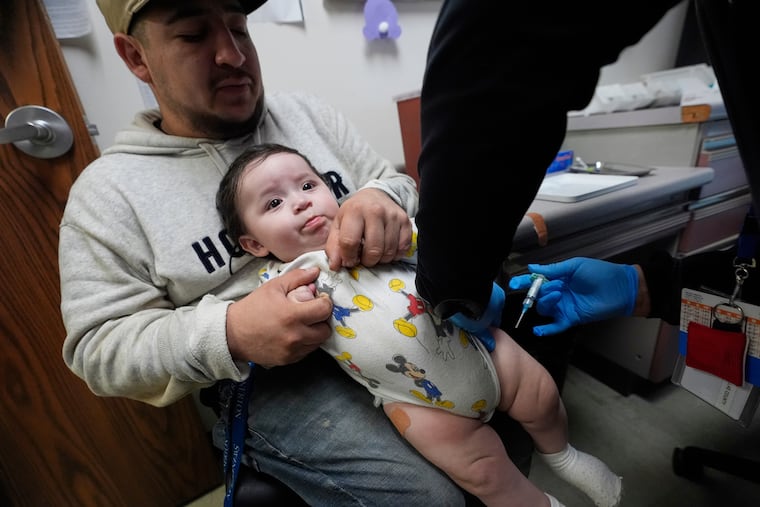
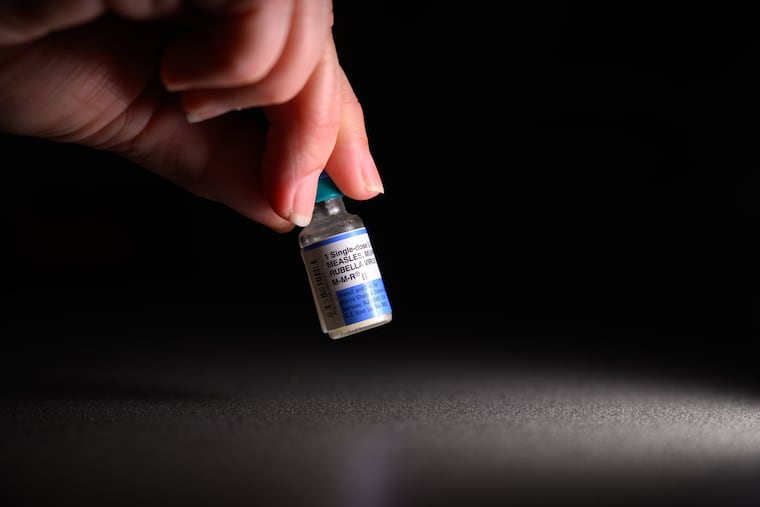
Pennsylvania’s Department of Health has scheduled dozens of pop-up clinics in rural communities, where some entire families come to get vaccinated. The measles vaccine is 93% effective after the first of two recommended doses.
Nurses employed by Chester County, which has the third-highest number of cases in Pennsylvania, make house calls to Amish and Mennonite families who don’t use cars.
Messaging has emphasized that anyone can get measles, said Jeanne Franklin, Chester County’s health director.
“The disease doesn’t know how old you are,” Franklin said. “This is not a childhood disease — you can get it at any point in your life if you’re unvaccinated.”

-
Your questions about Pennsylvania’s measles outbreak, answered
-
New vaccination data show hundreds of Philly-area schools vulnerable to a measles outbreak
-
Chester County has more measles cases than most entire states in the country
-
Pa. measles outbreak is nation’s worst, echoing deadly 1991 Philadelphia epidemic